

Partial Knee Replacement
What is a Partial Knee Replacement?
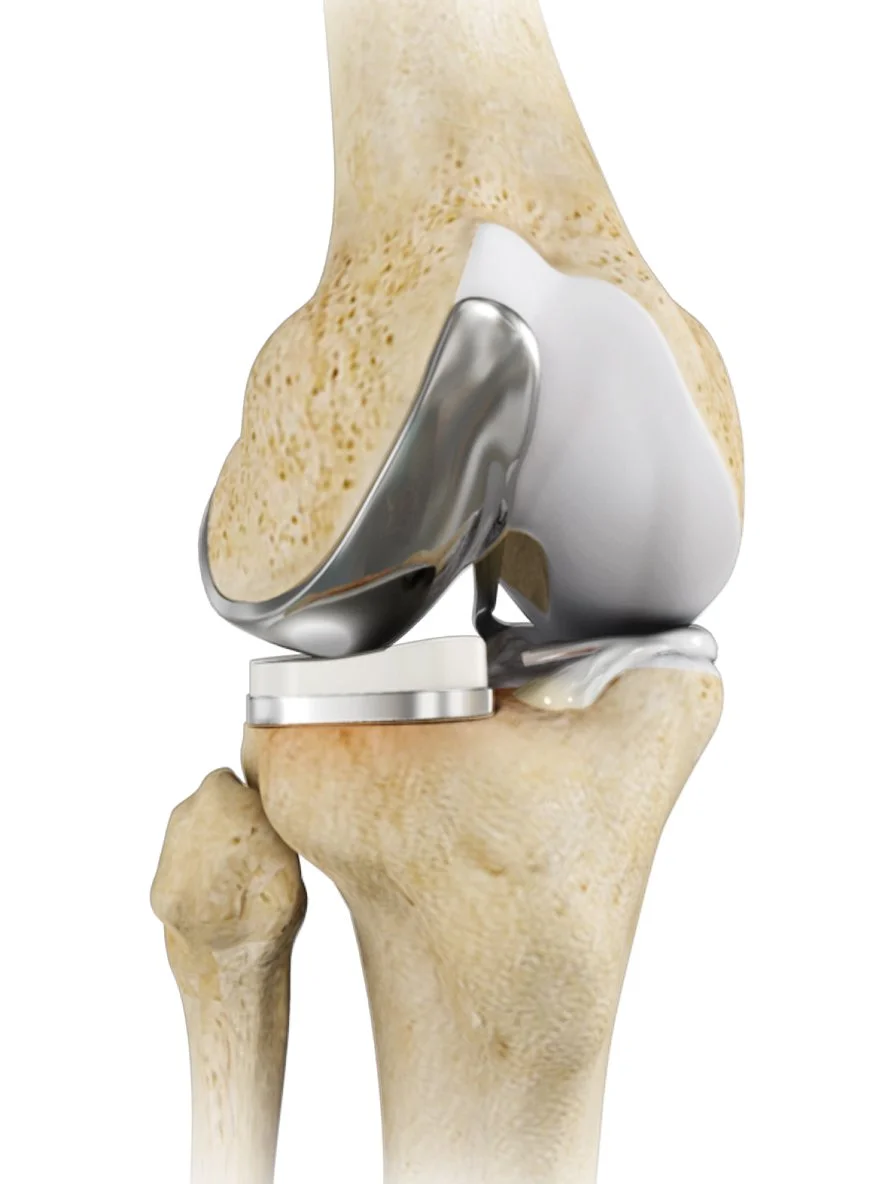
A Partial knee replacement —also known as a unicompartmental knee replacement (UKR)—is a surgical procedure used to treat arthritis affecting only one part of the knee joint. Instead of replacing the entire knee, only the damaged compartment is resurfaced while the healthy cartilage, bone, and ligaments are preserved.
The knee joint is divided into three compartments:
Medial compartment (inside of the knee)
Lateral compartment (outside of the knee)
Patellofemoral compartment (between the kneecap and thigh bone)
When osteoarthritis is limited to just one of these compartments, a unicompartmental knee replacement may provide excellent pain relief while maintaining much of the knee’s natural anatomy.
Advantages of Partial Knee Replacement
For suitable patients, unicompartmental knee replacement offers several advantages compared with total knee replacement:
Smaller incision and less tissue disruption
Less blood loss during surgery
Reduced pain and swelling
Shorter hospital stay
Quicker recovery and return to daily activities
More natural knee movement
Because the healthy ligaments and cartilage remain intact, many patients report the knee feels more natural than after a total knee replacement.
Robotic-Assisted Partial Knee Replacement
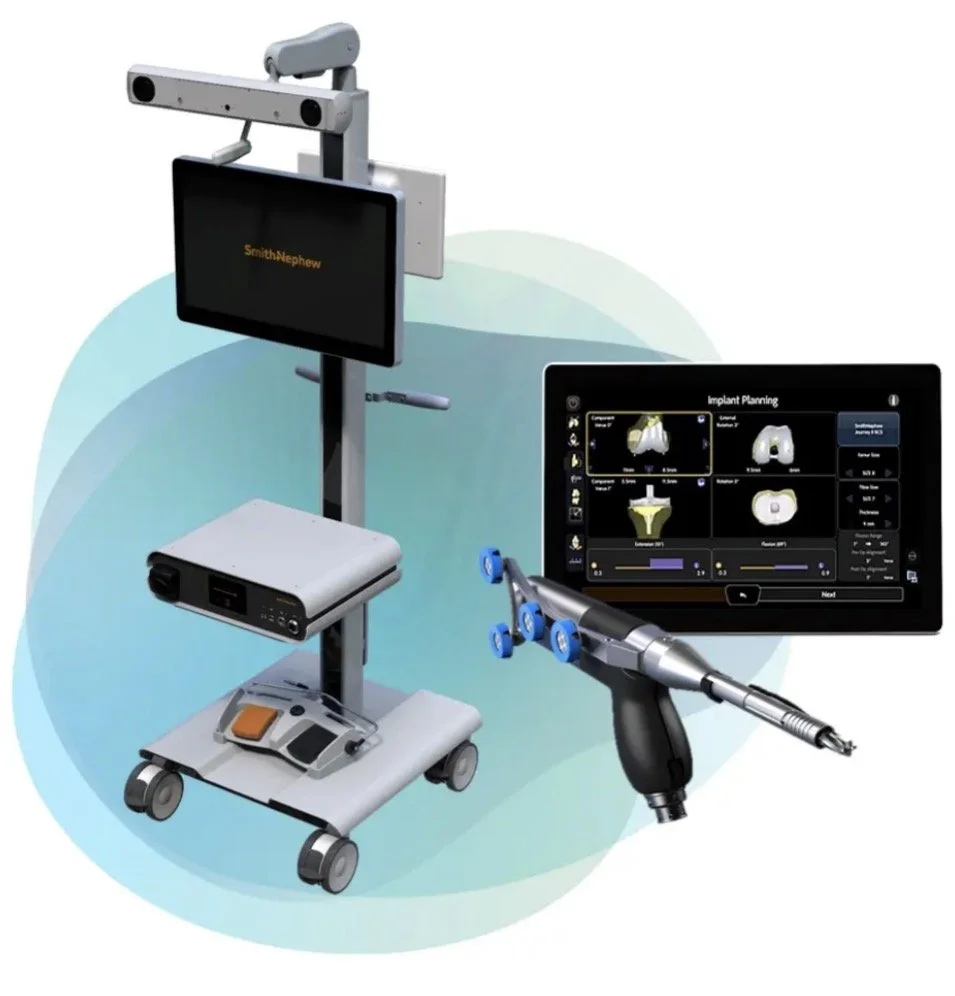
Dr Godwin is trained in the robotic-assisted technique for performing a unicompartmental knee replacement. This technology helps the surgeon plan and perform the operation with a high level of accuracy.
Robotic systems use advanced imaging and computer modelling to create a three-dimensional map of the knee joint during surgery. This allows the surgeon to precisely plan implant positioning based on the patient’s unique anatomy and balance the knee for the individuals ligaments.
Potential Advantages of Robotic Assistance
Robotic-assisted surgery may offer several benefits, including:
More precise implant positioning
Improved alignment of the knee joint
Greater preservation of healthy bone and ligaments
Potentially improved knee function
Reduced risk of implant malalignment
For partial knee replacement, accurate implant placement is particularly important because only one compartment of the knee is being resurfaced
Recovery and Rehabilitation
Recovery following a unicompartmental knee replacement is generally faster than after total knee replacement.
Typical recovery milestones include:
Walking within 24 hours after surgery
Walking independently within a few weeks
Return to driving and light activities within 4–6 weeks
Return to most normal activities within 3 months
Physiotherapy plays an important role in restoring knee movement, strength, and function.

Long-Term Outcomes
For appropriately selected patients, unicompartmental knee replacement provides excellent pain relief and functional improvement. Studies show high levels of patient satisfaction and long-term implant survival.
If arthritis develops in other compartments later, the knee can still be converted to a total knee replacement if required.
Risks and Potential Complications
As with any surgery, there are potential risks, including:
Infection
Blood clots
Implant loosening or wear
Stiffness
Progression of arthritis in other parts of the knee
Careful patient selection and modern surgical techniques help minimise these risks..
FAQs
Is a Partial Knee Replacement
right for me?
1
Not everyone with knee arthritis requires a total knee replacement. In many patients, arthritis affects only one side of the knee, most commonly the medial (inner) compartment.
You may be a candidate for a unicompartmental knee replacement if:
Your arthritis is limited to one compartment of the knee
Your ligaments are intact, particularly the anterior cruciate ligament (ACL)
Your knee has good range of motion
You experience localised pain on one side of the knee
Non-surgical treatments such as physiotherapy, medications, or injections are no longer effective
A detailed clinical examination and imaging (usually weight-bearing X-rays) are required to determine whether a partial knee replacement is suitable.
For patients who meet the criteria, a partial knee replacement can provide excellent pain relief with a faster recovery and a more natural feeling knee.
Modern implants are designed to last 15–20 years or longer in many patients, depending on activity level, implant type, and overall joint health.
2
How long does a partial knee
replacement last?
Most patients begin walking the day of surgery or the following day with the assistance of a physiotherapist.
3
When can I walk after surgery?
Driving is typically possible around 3–4 weeks after surgery, depending on recovery and which knee was operated on..
4
When can I drive again?
Low-impact activities such as walking, cycling, hiking, swimming, skiing and golf are usually encouraged once recovery is complete.